
Exosomes have gone from obscure cellular curiosities to the most hyped therapeutic modality of the decade. These extracellular vesicles (EVs) — nanosized packages of RNA, proteins, and lipids secreted by nearly every cell type — are nature’s built-in communication system. They carry messages between cells, reprogram distant tissues, and orchestrate complex biological responses.
If mRNA vaccines proved the power of lipid nanoparticles, exosomes are the upgrade nobody can ignore: naturally biocompatible, stable, capable of crossing barriers like the blood–brain barrier, and tunable for nearly any payload.
But here’s the hard truth: manufacturing exosomes is brutally difficult. Discovery science is dazzling; scale-up is a minefield. Isolation is tricky, reproducibility elusive, analytics underdeveloped, and regulations still in flux.
That’s where the right Contract Development and Manufacturing Organization (CDMO) makes or breaks a program. Not every biologics CDMO can pivot into exosomes; only those with the right mix of technical depth, regulatory foresight, and creative problem-solving will succeed.
Based on what we’ve seen in the field, here are the 10 non-negotiables every great exosome CDMO must have — expanded with nuance, examples, and the personality to cut through the usual biotech jargon.

1. Scalable Producer Systems
Exosomes don’t appear out of thin air; they come from living cells. And not all producer systems are created equal.
A world-class exosome CDMO needs the flexibility to handle:
- Stem cell–derived vesicles (MSC, iPSC) for regenerative medicine.
- HEK293 or CHO systems for therapeutic delivery.
- Custom-engineered producer cells for loading payloads or displaying targeting ligands.
The challenge isn’t just growing cells — it’s ensuring consistency under GMP conditions. That means serum-free, chemically defined media, closed-system bioreactors, and scalable perfusion runs that produce the same vesicle profile at 2 L as at 2,000 L.
A mediocre CDMO treats exosomes like conditioned medium in flasks. A great CDMO has digital twins for scale-up, monitoring vesicle yields in real-time and adjusting feeds, oxygen, and shear to optimize secretion.
Personality take: Think of it like brewing craft beer. Anyone can ferment a micro-batch. Only the best can make 10,000 liters taste identical.
2. Smart Payload Loading
Exosomes are empty envelopes until you put something inside.
The best CDMOs know that cargo loading is where value lives. Techniques include:
- Producer-cell engineering (the most elegant) — designing cells that naturally package siRNA, mRNA, or CRISPR payloads.
- Electroporation — zapping vesicles to slip cargo inside (risky but common).
- Transfection-based methods — turning cells into factories for therapeutic nucleic acids.
The trick isn’t just getting payloads in. It’s keeping them functional, stable, and evenly distributed. Otherwise, you have a batch where some vesicles are loaded rockets and others are empty balloons.
A strong CDMO invests in comparative loading studies, sequence integrity analytics, and stability optimization — because regulators will eventually ask, “How much of your dose actually contains payload?”
Personality take: Without payload QC, exosome therapies risk becoming like fortune cookies — you open one and hope there’s a message inside.
3. Next-Gen Purification
Here’s the industry’s dirty secret: ultracentrifugation doesn’t scale.
Every academic exosome lab uses it, but no regulator will accept it as GMP-compliant at commercial scale. A serious CDMO deploys:
- Tangential-flow filtration (TFF) for concentration and buffer exchange.
- Size-exclusion chromatography (SEC) for removing protein aggregates.
- Ion-exchange (IEX) and affinity chromatography for selective enrichment.
- Immunocapture methods for subtype-specific purification (e.g., tumor-derived EVs).
The goal? Purity and reproducibility. Exosomes must be clean of host DNA, proteins, and non-vesicular contaminants — without wrecking their membrane integrity.
A world-class CDMO also validates orthogonal workflows. Why? Because when regulators balk at one method, you need a backup process that proves equivalence.
Personality take: If purification is like making espresso, ultracentrifugation is boiling grounds in a sock. SEC and TFF? That’s your shiny barista machine.
4. Particle Analytics That Matter
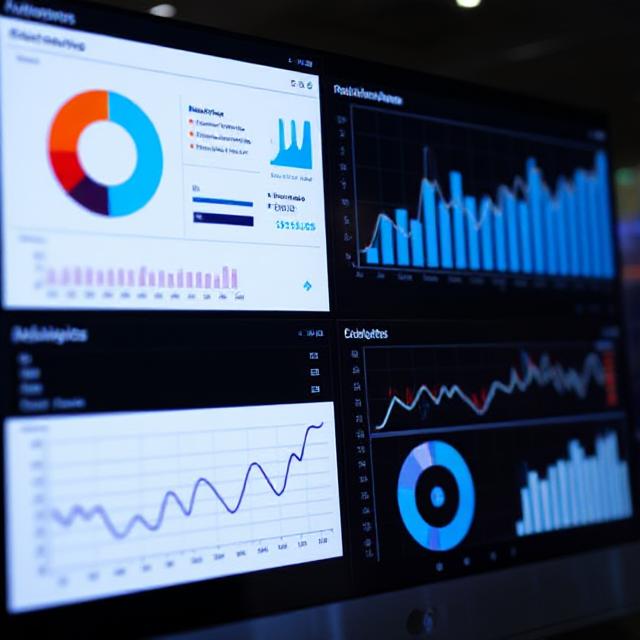
Particle counts are the first question every exosome team asks. But here’s the catch: a particle count without context is useless.
Yes, you need NTA, DLS, and cryo-EM. But the best CDMOs go further:
- Flow cytometry for EVs – tagging CD63, CD81, CD9 to confirm vesicle identity.
- RNAseq for cargo – proving that therapeutic payloads are intact and properly packaged.
- Proteomics (LC-MS/MS) – mapping exosome surface proteins for targeting profiles.
- Functional assays – correlating vesicle uptake with particle counts.
Great CDMOs also integrate digital QC dashboards, letting sponsors monitor CQA drift in real-time.
Personality take: Counting exosomes without function data is like bragging about how many emails you sent without checking if anyone opened them.
5. Potency Assays You Can Trust
Regulators don’t approve “vesicles.” They approve therapies. And therapies live or die on potency assays.
A strong exosome CDMO develops assays tailored to your indication:
- Cellular uptake assays – do vesicles deliver cargo into the right cells?
- Cytokine modulation assays – can they reprogram immune responses?
- Tissue-specific assays – e.g., cardiomyocyte repair, neuronal survival, wound healing.
Potency is not a side metric. It’s the single biggest regulatory bottleneck for exosome programs today.
World-class CDMOs also establish reference standards for potency early — so Phase I trials aren’t derailed by shifting definitions.
Personality take: Potency is like Tinder profiles. Numbers don’t matter if the chemistry isn’t there.
6. End-to-End Regulatory Literacy
Exosomes live in a grey zone. Are they biologics? Cell therapies? Advanced therapy medicinal products (ATMPs)? It depends on the regulator — and sometimes even the reviewer.
The best CDMOs don’t just know the rules. They anticipate them:
- FDA CBER’s evolving framework for EVs.
- EMA’s ATMP definitions and how exosomes may qualify.
- PMDA’s cautious but growing exosome interest.
- ISO and ISEV standards for vesicle characterization.
A world-class CDMO helps build CMC packages that defend your science: showing identity, purity, potency, safety, and reproducibility across batches.
Personality take: Regulatory literacy in exosomes is like being bilingual in a new country — you don’t just get by, you negotiate better deals.
7. Formulation That Preserves Vesicles
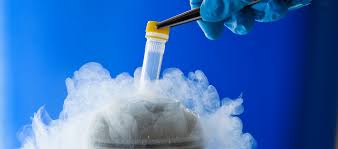
Exosomes are among the most biologically elegant delivery vehicles we’ve ever seen — but they are also among the most fragile. Their delicate lipid bilayer, cargo of RNA and proteins, and surface markers make them vulnerable to shear stress, pH drift, freeze–thaw cycles, and buffer incompatibility. One sloppy formulation decision can collapse membranes, aggregate particles, or leak payloads.
A serious exosome CDMO goes far beyond “just put it in saline.” Leaders offer a portfolio of formulation strategies tailored to both indication and logistics:
- Liquid storage formulations for short-term clinical supply, optimized with stabilizing excipients (e.g., trehalose, sucrose, mannitol) that reduce vesicle aggregation.
- Cryopreservation protocols with cryoprotectants (e.g., DMSO alternatives, glycerol derivatives) that maintain membrane integrity during LN₂ storage and global transport.
- Lyophilized (freeze-dried) formats for long-term stability and global distribution, requiring validated reconstitution protocols that don’t compromise vesicle function.
- Payload-protection strategies for nucleic acids (e.g., mRNA or siRNA), where vesicles are co-formulated with protective polymers, antioxidants, or stabilizing lipids to prevent cargo degradation.
The frontier is engineered formulations:
- PEGylation of vesicle surfaces to improve circulation half-life and reduce clearance.
- Lipid blending to reinforce bilayer rigidity and optimize biodistribution.
- Co-encapsulation with small-molecule stabilizers, growth factors, or targeting ligands to extend potency.
- Spray-drying and novel drying technologies being explored for oral or inhaled exosome formulations.
What separates a great CDMO is not just access to these tools, but the ability to map formulation choices to CQAs and clinical outcomes. For example: Which buffer prevents aggregation? Which cryoprotectant is FDA-preferred? Which formulation gives you stability and potency at 12 months under ICH conditions?
Personality take: Exosome formulation is like packing champagne for a long-haul flight. Get it wrong, and you open your suitcase to broken glass and a sticky mess. Get it right, and the bottle pops open halfway across the world — perfectly intact, celebration guaranteed.
8. GMP-Ready Fill-Finish
The last mile of exosome development — fill-finish — is often underestimated, yet it is where particle science collides with regulatory reality. You can have perfect upstream production and pristine purification, but if your fill-finish fails, your therapy never reaches the clinic.
A world-class exosome CDMO doesn’t treat fill-finish as an afterthought; it engineers it as part of the process. This means:
- Grade A isolators and robotic aseptic systems to minimize contamination risk and operator variability.
- Flexible formats — bulk drug substance, single-dose vials, pre-filled syringes, or cartridges — validated for exosome stability.
- ICH stability programs that define shelf life under global standards, backed by accelerated and long-term studies.
- Container–closure compatibility studies to ensure vesicles don’t adsorb to plastic, leach materials, or lose potency in storage.
- Freeze–thaw cycle validation to model real-world logistics from fill-finish site to trial clinic.
The great CDMOs also anticipate subtle pitfalls:
- Vesicles adhering to stoppers or glass.
- Air–liquid interfaces degrading surface proteins.
- Exosomes settling unevenly during storage, leading to dose inconsistency.
They mitigate these risks with surface-treated vials, inert closures, and gentle mixing protocols validated under GMP.
Too many developers only discover fill-finish problems after their first GMP lot — leading to costly delays. The best CDMOs integrate fill-finish early in development, ensuring the final format is aligned with clinical needs, regulatory filings, and commercial scalability.
9. Integrated Digital Systems
Exosome manufacturing is too complex for spreadsheets.
The best CDMOs run integrated digital systems:
- Real-time analytics for particle counts, potency, and CQA drift.
- Digital twins to model scale-up and predict yield.
- Continuous process verification (CPV) dashboards that regulators increasingly expect.
This isn’t just about data. It’s about trust. Sponsors need transparency; regulators need defensibility. Great CDMOs give both.
Personality take: Without digital integration, exosome manufacturing is like flying a 747 with a compass and a map.
10. Vision for Emerging Applications
Exosomes are not just therapeutics. They’re a platform.
Great CDMOs understand the adjacent opportunities:
- Exosome-based vaccines – delivering antigens in natural vesicles.
- Diagnostics – standardized EV preps for biomarker assays.
- Food & agriculture – plant-derived vesicles as nutraceuticals.
The leaders aren’t just manufacturing vesicles. They’re building the infrastructure for a vesicle economy.
Personality take: Exosomes are where biotech meets sci-fi. The CDMOs that win will be the ones who see beyond today’s trials to tomorrow’s industries.
Exosome Conclusions
Exosomes are too complex for generic CDMOs. The winners in this field will demand partners that combine cell culture mastery, advanced purification, analytics, regulatory foresight, and digital integration.
The 10 non-negotiables outlined here aren’t optional. They’re the blueprint for exosome success.
At Elise Biopharma, we don’t just manufacture vesicles. We build the bridge between biology’s oldest communication system and medicine’s newest frontier.
Top 20 Frequently Asked Questions About Exosome CDMO Services
1. What are exosomes and why are they being developed as therapeutics?
Exosomes (extracellular vesicles, or EVs) are nanosized vesicles secreted by cells that carry proteins, lipids, and nucleic acids. They are naturally evolved for intercellular communication and can cross biological barriers like the blood–brain barrier. Developers are advancing exosomes as drug delivery vehicles, regenerative medicine therapies, immuno-oncology tools, and diagnostic biomarkers.
2. How are exosomes different from synthetic nanoparticles (like LNPs)?
Unlike synthetic carriers, exosomes are biocompatible, less immunogenic, and contain surface proteins that guide targeting and uptake. They are also naturally stable in circulation. However, unlike LNPs, their heterogeneity and biological complexity make scalable manufacturing and QC more challenging.
3. Which cell systems are typically used to produce exosomes?
Common producer systems include mesenchymal stem cells (MSC), induced pluripotent stem cells (iPSC), HEK293, CHO, and other engineered mammalian cell lines. Some groups are also exploring plant- or bacterial-derived vesicles.
4. How scalable is exosome production?
Exosome production can be scaled from bench (2–10 L) to GMP (500–2,000 L) using bioreactor-based culture systems. Key challenges are maintaining vesicle quality, reproducibility, and potency across scales.
5. What methods are used to purify exosomes?
While ultracentrifugation is common in research, it does not scale for GMP. Scalable purification includes tangential-flow filtration (TFF), size-exclusion chromatography (SEC), ion-exchange chromatography (IEX), and affinity capture methods.
6. How are exosomes characterized and analyzed?
Typical QC includes nanoparticle tracking analysis (NTA), dynamic light scattering (DLS), electron microscopy, surface marker profiling (CD63, CD81, CD9), RNA and protein cargo analysis, potency assays, endotoxin/sterility testing, and stability studies.
7. What regulatory frameworks exist for exosome therapeutics?
Regulation is evolving. FDA (CBER), EMA, PMDA, and other agencies are developing guidelines. Exosomes may be classified as biologics, ATMPs, or novel biologics depending on jurisdiction and use. ISO/ISEV standards guide characterization and identity testing.
8. How do you load exosomes with therapeutic payloads?
Techniques include producer-cell engineering (most scalable), electroporation, transfection, or passive incubation. Each method has pros/cons in terms of efficiency, reproducibility, and stability.
9. How do you measure exosome potency?
Potency assays are indication-specific. Examples include cellular uptake studies, cytokine modulation assays, tissue repair assays (cardiomyocytes, neurons, fibroblasts), or immune activation assays for immuno-oncology.
10. What are the main challenges in exosome manufacturing?
The biggest hurdles are:
- Consistency of vesicle composition across scales
- Removal of host cell contaminants
- Validated potency assays
- Regulatory uncertainty
- Formulation and stability for clinical use
11. Can exosomes be lyophilized (freeze-dried)?
Yes, exosomes can be lyophilized to improve stability and enable global distribution. However, lyophilization protocols must be optimized to preserve membrane integrity and biological activity.
12. What fill-finish options exist for exosomes?
Exosomes can be filled aseptically into vials, pre-filled syringes, or cartridges. Grade A isolators and validated container–closure systems are essential to maintain sterility and vesicle integrity.
13. What are the typical yields in exosome production?
Yields vary widely depending on the producer cell line, culture conditions, and purification method. High-density perfusion systems with optimized media can significantly increase vesicle output.
14. Are exosome therapies safe?
Safety depends on source, purity, and use. Regulatory agencies require strict QC to ensure absence of infectious agents, mycoplasma, residual host DNA/protein, and endotoxin. Immunogenicity must also be evaluated.
15. What are exosome-based diagnostics?
Exosomes in blood, urine, or saliva reflect the molecular state of their parent cells. They are being developed as liquid biopsy biomarkers for cancer, neurodegenerative disease, cardiovascular conditions, and infectious diseases.
16. How does Elise Biopharma ensure exosome reproducibility?
We use digital-twin scale-up models, in-line process monitoring, validated scale-down models, and CPV dashboards. This ensures critical quality attributes (CQAs) remain stable from bench to GMP scale.
17. Can exosomes cross the blood–brain barrier?
Yes — one of their most promising features. Certain exosomes naturally penetrate the BBB, making them ideal for delivering RNA or protein therapies to the central nervous system (CNS).
18. What are the applications of stem cell–derived exosomes?
Stem cell exosomes are being developed for regenerative medicine applications including wound healing, osteoarthritis, myocardial infarction, stroke recovery, and neurodegeneration.
19. How long does it take to develop a GMP exosome process?
Timelines vary, but typical programs require 12–24 months to move from feasibility and process development into GMP manufacturing, depending on indication, regulatory strategy, and scale.
20. Why choose Elise Biopharma as an exosome CDMO partner?
Because exosome manufacturing is not “plug-and-play.” We combine advanced bioreactor platforms, proprietary purification workflows, in-house potency assays, regulatory dossier support, and GMP aseptic fill-finish under one roof. Innovators partner with us not just for capacity, but for expertise, trust, and speed to clinic.
Want to learn about our Exosome CDMO Services?
Learn more here –> Exosome CDMO Services
Ready to discuss you next project??
Contact our sales team at info@elisebiopharma.com