
The fungi strain fermentation market has witnessed substantial innovation in recent years, driven by the increasing demand for sustainable and efficient biotechnological solutions across various industries. These advancements have not only enhanced the yield and efficiency of fungal fermentation processes but also broadened the application spectrum in pharmaceuticals, agriculture, and biofuel production. Here, we explore some of the most recent and impactful developments in this dynamic field.

1. Genetic Engineering and CRISPR/Cas9: Rewriting the Fungal Genome
Few technologies have transformed the field of fungal biotechnology as dramatically as CRISPR/Cas9. Once limited to random mutagenesis and clumsy recombination events, researchers can now execute precise, scar-free edits in a fraction of the time. Using Cas9-mediated double-strand breaks with guide RNAs tailored to essential loci, scientists knock out non-productive pathways, silence competing metabolic branches, or insert high-yield variants of biosynthetic genes.
Modern fungal systems—Aspergillus niger, Trichoderma reesei, Penicillium chrysogenum, and Saccharomyces cerevisiae—have become programmable cell factories. By multiplexing guide RNAs, entire pathways for secondary metabolites (from β-lactam antibiotics to cellulases and proteases) can be fine-tuned for improved flux balance. Moreover, CRISPR activation (CRISPRa) and interference (CRISPRi) enable reversible modulation of transcription, allowing dynamic control of enzyme ratios within a single bioreactor run. The precision and reversibility of this system underpin a new era of fungal metabolic design—one that prioritizes predictability, regulatory compliance, and scalability.
2. Novel Fermentation Technologies: From Static Tanks to Intelligent Bioreactors
Fermentation once meant static vessels and slow, manual control. Now, intelligent bioreactor systems have turned fungal fermentation into a data-rich engineering discipline. Solid-state fermentation (SSF) remains invaluable for filamentous species whose mycelia struggle in liquid agitation; it mimics the oxygen and substrate gradients of soil and decaying biomass, promoting the secretion of industrial enzymes such as xylanases and pectinases. Meanwhile, hybrid designs that couple SSF with liquid phase nutrient recirculation (semi-SSF) are blurring the old boundary between submerged and surface cultures.
Continuous fermentation is equally transformative. Equipped with perfusion modules and real-time monitoring of dissolved oxygen, pH, and rheology, these systems allow Aspergillus or Rhizopus species to run for weeks without downtime. Digital twin models now predict metabolic drift, foam dynamics, and oxygen limitations before they occur, allowing adaptive feed strategies to maximize space-time yield. These innovations make fungal fermentation competitive not only for enzyme and organic acid production, but also for advanced biomaterials and pharmaceuticals.
3. Integration with Synthetic Biology: Building Circuits, Not Just Strains
Synthetic biology has recast the concept of “strain improvement” into that of biological circuit design. Using standardized DNA parts and computational pathway assembly, scientists now create synthetic operons that reroute fungal metabolism toward molecules never before produced by nature. Modular plasmid toolkits such as Golden Gate and MoClo Fungi enable plug-and-play insertion of promoters, terminators, and coding sequences with predictable expression levels.
In pharmaceutical discovery, this allows fungi to act as micro-factories for alkaloids, terpenoids, and non-ribosomal peptides with custom pharmacokinetics. Meanwhile, synthetic chassis are emerging—Yarrowia lipolytica, for example, engineered to produce long-chain fatty acids or biodegradable polymers from waste lipids. Combined with dynamic regulatory elements and synthetic biosensors, these fungal hosts can now sense nutrient states or product accumulation and auto-adjust their own metabolism in real time. Synthetic biology has made fungal fermentation less an art and more a programmable manufacturing platform.
4. Enhanced Strain Development: Evolution Meets Automation
Genetic tools alone do not make an elite production strain; evolution still has a role. Adaptive Laboratory Evolution (ALE) exposes fungal populations to stepwise environmental challenges—heat, osmotic stress, substrate toxicity, or high-product titers—forcing beneficial mutations that conventional mutagenesis would never uncover. High-throughput colony imaging and microdroplet sorting now allow thousands of evolved isolates to be screened within days.
Automation has accelerated this process further. Integrated robotics platforms handle micro-culturing, phenotyping, and genome sequencing, turning the iterative cycle of mutate-test-select into a data-driven pipeline. Some laboratories even employ machine-learning models to predict which mutations will likely confer tolerance or improved flux before performing the next round. The outcome is an accelerated evolution process that yields strains with remarkable stability, high substrate tolerance, and consistent productivity under industrial stress—traits once considered beyond rational design.
5. Sustainable Practices and the Circular Bioeconomy: Waste as Feedstock
The momentum toward a circular economy has reshaped how fungal fermentation integrates with the broader sustainability agenda. Instead of relying on refined sugars or costly substrates, researchers now exploit lignocellulosic biomass, food waste, and agro-industrial by-products as feedstock. Fungi’s natural enzymatic diversity enables them to degrade cellulose, hemicellulose, and even hydrocarbons, converting what was once waste into value-added chemicals, bioplastics, and biofuels.
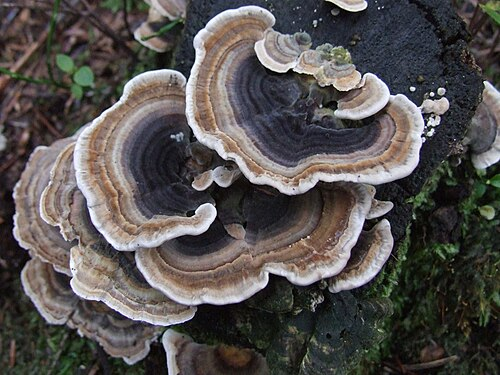
Recent work with Aspergillus oryzae and Trametes versicolor demonstrates how optimized enzyme consortia break down corn stover or rice husk into fermentable sugars, feeding subsequent microbial conversions. Life-cycle analyses show reductions of up to 80 % in carbon footprint compared with petrochemical routes. Moreover, fermentation residues can serve as protein-rich feed or soil conditioners, closing the loop entirely. The modern fungi strain fermentation industry thus sits at the confluence of biotechnology, waste valorisation, and environmental restoration.
6. Commercialization and Industrial Scaling: From Bench to Billion-Liter Bioreactors
Innovation is meaningless without scalability, and the last decade has finally proven that fungi-based biomanufacturing can compete at industrial volumes. Advances in bioreactor engineering, including enhanced impeller designs, oxygenation through micro-spargers, and low-shear agitation, have made large-scale cultivation of filamentous fungi both reliable and reproducible. Process analytical technology (PAT) systems deliver real-time data on viscosity, oxygen uptake rate (OUR), and carbon dioxide evolution rate (CER), allowing dynamic feed control that maintains productivity even at 10,000-L and beyond.
Downstream processing has likewise matured. Tangential-flow filtration, continuous centrifugation, and smart flocculation strategies minimize biomass carryover and streamline clarification. Spray-drying and fluid-bed coating technologies preserve enzyme activity for years under ambient storage. With digital batch records and GMP-aligned control architectures, today’s fungal facilities mirror pharmaceutical precision rather than traditional fermentation shops.
Commercialization is no longer theoretical; companies in biopharma, food tech, and materials science are already marketing fungal-derived enzymes, mycoproteins, and specialty chemicals at global scale. The convergence of molecular precision, process intensification, and sustainability has made fungi not merely the workhorses of biology—but the architects of a cleaner, circular industrial future.
Conclusion

The recent advancements in fungi strain fermentation highlight a promising future for the biotechnology industry. With continuous innovation in genetic engineering, fermentation technology, and sustainable practices, fungi are set to play a pivotal role in addressing some of the most pressing challenges in healthcare, agriculture, and environmental sustainability. As research and development continue to push the boundaries, the potential applications of fungi in biotechnology are bound to expand even further, making it a key area of interest for investors and researchers alike.