
Fermentation is no longer the quiet corner of biotechnology—it is the industrial heart of biological manufacturing. From therapeutic enzymes and recombinant proteins to plasmid DNA, probiotics, and metabolites, the Fermentation CDMO has evolved from a service provider into the biological architect of precision, speed, and reproducibility. Modern programs live or die by the sophistication of these microbial factories and the engineers who translate molecular design into stable, repeatable yield.
Fermentation, at its best, is neither art nor automation. It is a continuous negotiation between physics, chemistry, and life itself. The organism’s logic meets human intent—and the success of that conversation defines both science and commerce.
The Molecular Symphony: How Fermentation Works in Practice
At its core, fermentation is controlled metabolism. It harnesses the natural behavior of microorganisms—E. coli, Pichia pastoris, Bacillus subtilis, Streptomyces, and others—to convert carbon sources into complex bioproducts. Yet, behind the apparent simplicity of “grow and harvest” lies a lattice of interdependent systems.
The best Fermentation CDMOs understand that the organism does not care about human schedules; it responds to gradients, shear, pressure, and nutrient flux. Industrial bioreactors are, therefore, living feedback loops. Sensors measure dissolved oxygen (DO), CO₂ off-gas, and pH. Control systems adjust feed rates and agitation in response to minute biological shifts. This dance continues for hours or days until the broth’s metabolic music aligns with the program’s commercial rhythm.
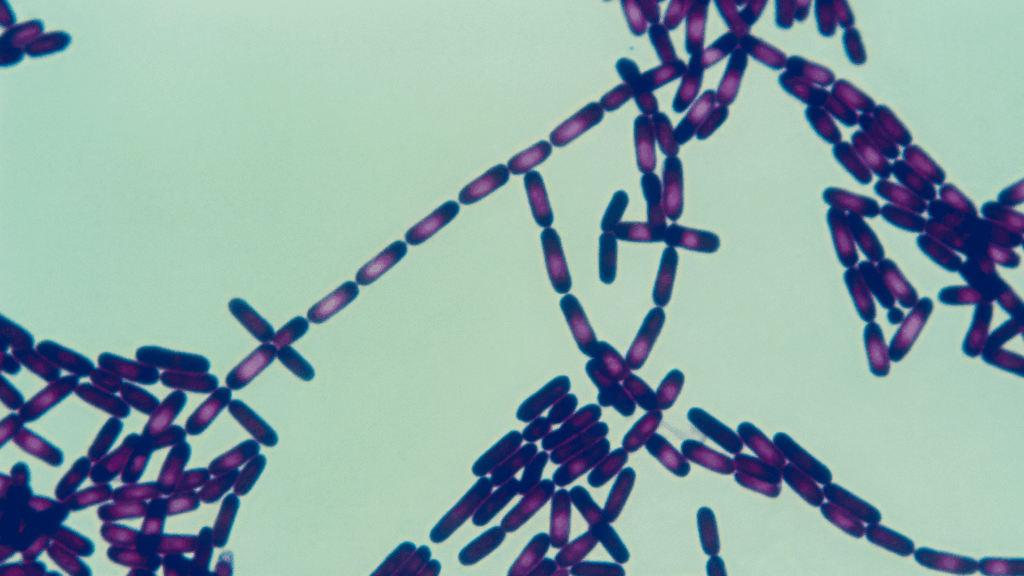
The modern fermentor is a hybrid instrument: stainless steel precision coupled with algorithmic intelligence. Real-time optical sensors detect cell density; near-infrared spectroscopy traces nutrient uptake; machine-learning models predict oxygen limitation hours before it occurs. Adaptive CDMOs integrate these insights into process analytical technology (PAT) frameworks, turning fermentation into a reproducible science rather than an empirical gamble.
The Niche Hosts Behind Biomanufacturing Versatility
Every microbe tells a story. E. coli remains the undisputed speed champion—fast, inexpensive, and genetically transparent. For simple proteins, plasmid DNA, and diagnostic enzymes, its utility is unrivaled. The caveat is inclusion body formation, which demands refolding expertise to reclaim functionality.
When disulfide bridges, secretion, or glycosylation enter the picture, Pichia pastoris takes the stage. Yeast systems bridge the microbial–eukaryotic divide, offering eukaryotic folding fidelity without the overhead of mammalian culture. Their methanol or glycerol promoters allow tight expression control, while their secretory pathways simplify purification.
Bacillus species offer another dimension: spore-forming robustness, GRAS/QPS regulatory comfort, and straightforward secretion. These make them ideal for probiotics, industrial enzymes, and feed additives—fields where thermal and pH resilience are prized.
Meanwhile, filamentous fungi and actinomycetes remain the silent specialists of secondary metabolites and antibiotics, producing molecules with complex post-translational modifications and unconventional structures.
The mark of an advanced Fermentation CDMO is fluency across these systems—choosing not the trendiest host, but the one that yields both functional truth and commercial viability.
The Substrate Revolution: From Glucose to Circular Carbon
Traditional fermentation fed on commodity glucose and nitrogen salts. Tomorrow’s will feed on what the planet wastes. Brewer’s spent grain, dairy permeate, and lignocellulosic hydrolysates are emerging as carbon sources for precision fermentation.
This shift is not charity—it is economics. Sustainable substrates can reduce cost of goods by up to 20%, while simultaneously improving ESG metrics and reducing dependency on volatile agricultural commodities. For enzymes and metabolites, substrate composition directly affects redox balance and byproduct profiles. Adaptive CDMOs use feed-forward control systems to match substrate composition with microbial metabolism, maintaining stable yields despite variable raw materials.
Circular-economy fermentation is more than marketing—it’s risk mitigation disguised as sustainability.
Scaling the Invisible: The Physics of Large-Scale Bioreactors
Scaling from 2 L to 2,000 L is not multiplication; it’s metamorphosis. At large volumes, bubbles rise slower, heat removal lags, and gradients form that no microscope ever warned you about. The trick is to make physics and biology agree.
Modern Fermentation CDMOs use computational fluid dynamics (CFD) to model gas–liquid transfer, mixing times, and shear zones. The design of impellers, spargers, and baffles is not decorative—it dictates whether your cells thrive or drown in their own CO₂.
Critical parameters such as kLa (mass transfer coefficient), viscosity, and heat flux define the reality of scale-up. Adaptive control strategies adjust oxygen supply and feed dynamically to prevent overflow metabolism or lactate buildup. A smart fermentor does not chase targets; it anticipates them.
Beyond Upstream: Downstream Integration as a Design Philosophy
The line between “fermentation” and “purification” is administrative fiction. Every choice upstream dictates what happens downstream. For example, periplasmic expression in E. coli may save a chromatography step. Secreted expression in Pichia can cut clarification costs in half.
Modern CDMOs treat ion exchange chromatography, tangential flow filtration (TFF), and hydrophobic interaction chromatography (HIC) as adjustable systems, not fixed recipes. By tuning conductivity, pH, and gradient slopes, they balance yield, purity, and cost with mathematical precision.
Filtration and polishing are where mediocre processes hemorrhage time. Fouling, shear, and membrane polarization are not random—they’re predictable physical consequences. The best operators prevent them through predictive maintenance and feed conditioning, not post-mortems.
The Analytics of Certainty
Analytical control in fermentation isn’t the epilogue—it’s the connective tissue between intention and evidence. In the modern Fermentation CDMO, analytics sit at the table from day one, shaping process logic, scale-up strategy, and regulatory credibility. The laboratory is no longer an annex to production; it is the production brain, quietly threading certainty through every variable.
From Instruments to Intelligence
Mass spectrometry still reigns, but not as an autopsy tool—it’s a living sensor of truth. High-resolution LC–MS/MS platforms characterize post-translational modifications, track oxidative variants, and quantify residuals down to parts per billion. Circular dichroism (CD) and differential scanning calorimetry (DSC) reveal folding stability, mapping the energy landscapes that separate a functional enzyme from a denatured disappointment.
Where a decade ago HPLC was an endpoint, UPLC, CE-SDS, and MALS (multi-angle light scattering) now provide real-time fingerprints. Adaptive facilities—particularly in northern Europe, where regulatory rigor meets design minimalism—build analytics into the fermentor loop itself. Dissolved oxygen trends, off-gas composition, and online Raman spectroscopy form continuous signatures of metabolic health.
It’s the Scandinavian model of precision: sleek, data-driven, and allergic to drama. You see the same ethos in the UK’s biomanufacturing corridors—method validation treated as literature, not bureaucracy—and in Germany’s insistence that “Gleichheit und Kontrolle” (consistency and control) are two halves of the same equation.
Designing the Assay Before the Reactor
In adaptive operations, analytical design begins before a liter of broth is inoculated. Design of Experiments (DoE) approaches guide which metabolites will be monitored, which process parameters will feed predictive models, and which analytical uncertainties are worth the effort to shrink.
A strong Fermentation CDMO aligns its analytical method development with intended use. An enzyme destined for high-shear chemical synthesis must be validated under solvent and temperature stress, not under laboratory daydreams. A probiotic intended for sub-Saharan distribution must be profiled under 60% humidity, not New England winters. A plasmid DNA vector meant for lyophilization needs its supercoiled fraction, nicking ratio, and A260/A280 spectral shifts characterized under repeated freeze–thaw cycles and vacuum desiccation.
This is analytics as empathy: testing not for perfection, but for reality.
Real-Time Release and Data Integrity
Where once analytics were retrospective, now they are predictive. Real-time release testing (RTRT) uses in-line optical and spectroscopic tools calibrated by multivariate analysis (MVDA) to release batches on statistical confidence rather than calendar waiting.
The infrastructure is digital to its bones—21 CFR Part 11–compliant LIMS and ELN systems with full ALCOA+ integrity (Attributable, Legible, Contemporaneous, Original, Accurate, plus Complete, Consistent, Enduring, and Available). Each reading is timestamped and mirrored; every deviation leaves an audit breadcrumb trail. When a regulator asks for data justification, the answer is not a file share—it’s a link that tells a story.
This is the modern cultural shift: QA becomes curatorial. The analyst is no longer a gatekeeper but a narrator of truth.
Fermentation’s Forgotten Branches: Phages, Vesicles, and Hybrid Systems
Fermentation is expanding beyond expression systems into hybrid biological domains that once belonged to science fiction.
Phages — The Renaissance of the Viral Craft
Phage manufacturing is not a curiosity; it’s an ecosystem of host–virus choreography. Adaptive CDMOs cultivate phage systems with precise multiplicity of infection (MOI), using biosafety-level containment and microfiltration cascades to harvest active virions while excluding host DNA. Endotoxin clearance, often the make-or-break parameter for therapeutic phages, is verified through Limulus amebocyte lysate (LAL) or recombinant Factor C assays validated against real broth matrices, not sterile buffers.
European teams—particularly in Belgium, Sweden, and Germany—are pioneering turbidostat-based phage amplification, marrying continuous culture with automated viral kinetics monitoring. This yields reproducibility that static batch infection can’t match.
Vesicles — The Subcellular Frontier
Extracellular vesicles (EVs), whether bacterial outer-membrane vesicles or yeast-derived exosomes, have become the new nanocarriers of immune modulation and RNA transport. Producing them requires paradoxical finesse: applying controlled stress (heat shock, osmotic gradient, quorum sensing modulation) to trigger vesicle shedding, but never crossing into cell lysis.
Isolation uses size-exclusion chromatography (SEC) with orthogonal anion-exchange or density-gradient ultracentrifugation, and every EV lot is fingerprinted by nanoparticle tracking analysis (NTA), TEM, and Western blotting for canonical markers (CD63, Alix, TSG101). What once lived in academic labs is now industrialized within GMP frameworks, complete with potency assays linking vesicle morphology to biological payload.
Hybrid Systems — The New Biotech Esperanto
At the boundaries, microbial and cell-free systems are beginning to hybridize. Enzymatic cascades replace multi-step organic syntheses, and cell-free expression systems bridge in vivo productivity with in vitro control. Adaptive CDMOs combine these: using microbial fermentation to produce enzymes and then applying those enzymes in non-cellular biocatalysis platforms.
This model—half biology, half engineering—delivers rare peptides, chiral amines, or glycoengineered intermediates at extraordinary speed. It’s the quiet frontier: chemistry reborn through biology’s grammar.
The Cultural DNA of Adaptive Fermentation
If technology defines capacity, culture defines consistency. The best fermentation facilities share a collective temperament: structured, modest, and unflappable.
European operators tend toward what engineers call operational stoicism. In Sweden, it’s lagom—the just-right balance between precision and pragmatism. In Germany, it’s Ordnung mit Bewegung—order with motion.
In the UK, it’s the quiet confidence of writing deviation reports before regulators even ask. Flat hierarchies are critical. When the dissolved-oxygen probe misbehaves, the microbiologist closest to the fermentor—not an executive three floors up—makes the call. This autonomy shortens feedback cycles and embeds responsibility where it belongs: in proximity to data.
Digital twins of bioreactors allow predictive adjustments hours before real-time sensors detect drift. Every signal—feed pump flow, base titration rate, oxygen uptake—streams into historians that visualize cause and effect. Deviations are discussed in minutes, not postmortems.
Transparency is not moral virtue; it’s the engineering principle that keeps the biology honest.
The Philosophy of Modern Fermentation
Fermentation is not the subjugation of microbes but a dialogue with them. Each culture vessel is a microcosm of negotiation between entropy and intention. Adaptive CDMOs understand that variability is not the enemy—it’s the message.
Rather than stamping out fluctuations, they study them. A 2% dissolved-oxygen drift might trigger metabolic rebalancing that enhances yield. A brief temperature perturbation might unfold a beneficial stress response. These aren’t accidents; they’re natural experiments.
Fermentation thus mirrors Darwinian dynamics in compressed time: variation, selection, retention—but framed by mathematics and monitored by analytics. The process evolves toward equilibrium through cumulative learning. Batch records become evolutionary logs.
In the language of process scientists, autocorrelation of deviation becomes a source of optimization. In the poetry of philosophy, biology whispers back to its maker.
Conclusion — Fermentation as Civilization, Reconsidered
Fermentation has always been civilization’s heartbeat—from the bread of ancient Egypt to the recombinant proteins of Oxford and Munich. Today, its reincarnation is both digital and microbial: a living orchestra of stainless steel, software, and cells.
To call it mere manufacturing is to miss the point. Fermentation CDMOs have become interpreters of nature’s dialects—translating molecular intuition into reproducible geometry, turning random mutation into measured control.
The European sensibility—rigorous, quietly elegant, engineering-first—permeates this philosophy. It prizes not speed for its own sake but repeatable truth. The Americans may call it “adaptive biomanufacturing.” The Germans might say präzise Lebendigkeit—precise vitality. The Swedes might nod and call it just functional enough to be beautiful.
And perhaps that is fermentation’s final form: the convergence of biology and reason into an economy of disciplined life.
In every fermentor, a civilization bubbles—cells, sensors, and scientists negotiating the edge between chaos and control. The outcome is not just product; it is proof that the logic of living systems can, with care and respect, be made industrial without being made dull.
That is the analytics of certainty in its fullest sense: when the data, the organism, and the human mind reach a quiet mutual understanding.
Contact our team directly at info@elisebiopharma.com