
As the demand for next-generation natural products, precision biosynthesis, and novel antibiotics rises, the limitations of conventional microbial hosts become more apparent. While E. coli and Bacillus excel in protein expression, they fall short in handling large, complex biosynthetic gene clusters (BGCs) or producing high-value secondary metabolites. Enter Streptomyces coelicolor—a soil-dwelling actinomycete with extraordinary genetic and metabolic potential.
Long known for its ability to produce structurally diverse antibiotics, S. coelicolor is now finding renewed relevance as a synthetic biology platform for combinatorial biosynthesis, drug discovery, and industrial-scale expression of complex enzymatic pathways.
Unique Biology: Filamentous Growth and Secondary Metabolism
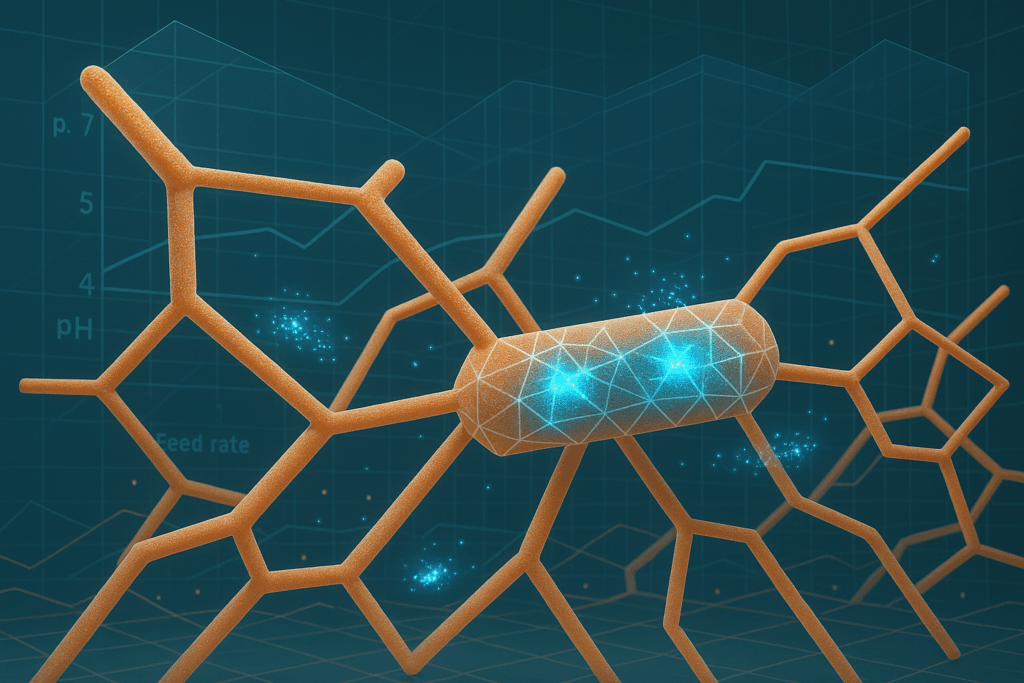
Streptomyces coelicolor belongs to the Actinobacteria phylum and exhibits a filamentous, mycelium-like growth pattern more similar to fungi than bacteria. This unique morphology enables extensive surface colonization and makes it naturally suited for solid-state fermentation as well as submerged cultures under specialized conditions.
What truly distinguishes S. coelicolor, however, is its exceptionally large genome (~8.7 Mb), which contains over 20 biosynthetic gene clusters dedicated to the production of polyketides, non-ribosomal peptides, siderophores, and other secondary metabolites. These clusters are modular and inducible, enabling targeted manipulation of pathway logic.
Notable metabolic products include:
- Actinorhodin: A polyketide antibiotic produced via a Type II PKS pathway.
- Undecylprodigiosin: A red pigmented antibiotic with immunosuppressive activity.
- Calcium-dependent antibiotics (CDAs): Non-ribosomal peptides with lipopeptide structures.
These molecules often serve as scaffolds for medicinal chemistry or biosynthetic remodeling.
Engineering Potential: A Synthetic Biology Goldmine
S. coelicolor is rapidly becoming a go-to chassis for expressing heterologous biosynthetic pathways due to:
- Genetic tractability: Advanced tools for CRISPR-Cas9, homologous recombination, and integrative plasmids.
- Capacity to express large BGCs: Up to 150 kb clusters have been successfully integrated and expressed.
- Low native expression of cryptic pathways, which makes it ideal for silent cluster activation and derepression studies.
Recent advances have enabled:
- Expression of deep-sea metagenomic BGCs to uncover novel antimicrobials.
- Pathway refactoring for engineered variants of erythromycin and rapamycin analogs.
- Combinatorial expression of hybrid NRPS/PKS clusters, paving the way for biosynthetic libraries of small molecules.
The Streptomyces genus as a whole produces ~70% of known natural antibiotics. S. coelicolor provides a sequenced, well-characterized, and modifiable base for leveraging this biosynthetic diversity.
Industrial Relevance: Beyond Antibiotics
While its antibiotic pedigree is well established, S. coelicolor is now being explored for broader applications:
- Custom enzymatic pathways for the synthesis of rare sugars, alkaloids, and prenylated compounds.
- Plant microbiome biostimulants and bioactive molecules for agricultural biocontrol.
- Platform for glycosylation of therapeutic agents using endogenous glycosyltransferases.
- Chassis for terpene synthesis, such as geosmin and sesquiterpenoids.
Unlike E. coli or yeast, Streptomyces has evolved mechanisms for handling redox-intensive and multistep secondary metabolism, making it uniquely suited for “high-maintenance” synthetic pathways.Process Considerations: Cultivation, Scale-Up, and DSP
Fermentation of S. coelicolor presents unique challenges due to its filamentous morphology. However, recent innovations have improved its compatibility with industrial bioreactors:
- Pellet morphology control via shear modulation, medium viscosity, and inoculum density.
- Solid-state and semi-solid fermentation approaches for high-yield natural product biosynthesis.
- Co-culture strategies to activate silent BGCs or modulate stress-induced production.
Downstream processing typically includes:
- Solvent extraction of bioactive secondary metabolites.
- Precipitation and ultrafiltration for pigment and antibiotic recovery.
- Bioassay-guided fractionation for complex mixtures.
Regulatory and Strategic Fit
While S. coelicolor lacks the GRAS status of Bacillus or the familiarity of E. coli, its natural antibiotic production history and established use in discovery platforms provide a strong regulatory foundation. For synthetic biology firms, enzyme developers, and natural product researchers, it offers a unique chassis that fills a gap no other host can.
Academic consortia and commercial players alike are now investing in Streptomyces-based platforms for the scalable, modular production of rare and complex molecules. Its rise reflects a broader movement toward chassis diversification and genome-mined innovation.
Conclusion:
Streptomyces coelicolor is no longer just a tool for antibiotic discovery. It is a programmable, high-potential host organism ready to power the next generation of bioactive molecules, rare enzymes, and synthetic biosynthetic pathways. With the right infrastructure and engineering toolkit, this soil-dwelling microbe could become one of the most valuable platforms in post-genomic biomanufacturing.
In an age defined by complexity, Streptomyces coelicolor delivers a platform designed for it.